Why Focus Fails
Around the year 380, a monk in the Egyptian desert described a state that arrived at the fourth hour of the morning and lasted until the eighth. Compulsive checking, restlessness that feels like insight, the sudden certainty that somewhere else would be better. He had no phone. The research suggests focus is not something we aim but something we construct by suppressing everything else, which means distraction may be less a failure of attention than the same system solving a different problem.
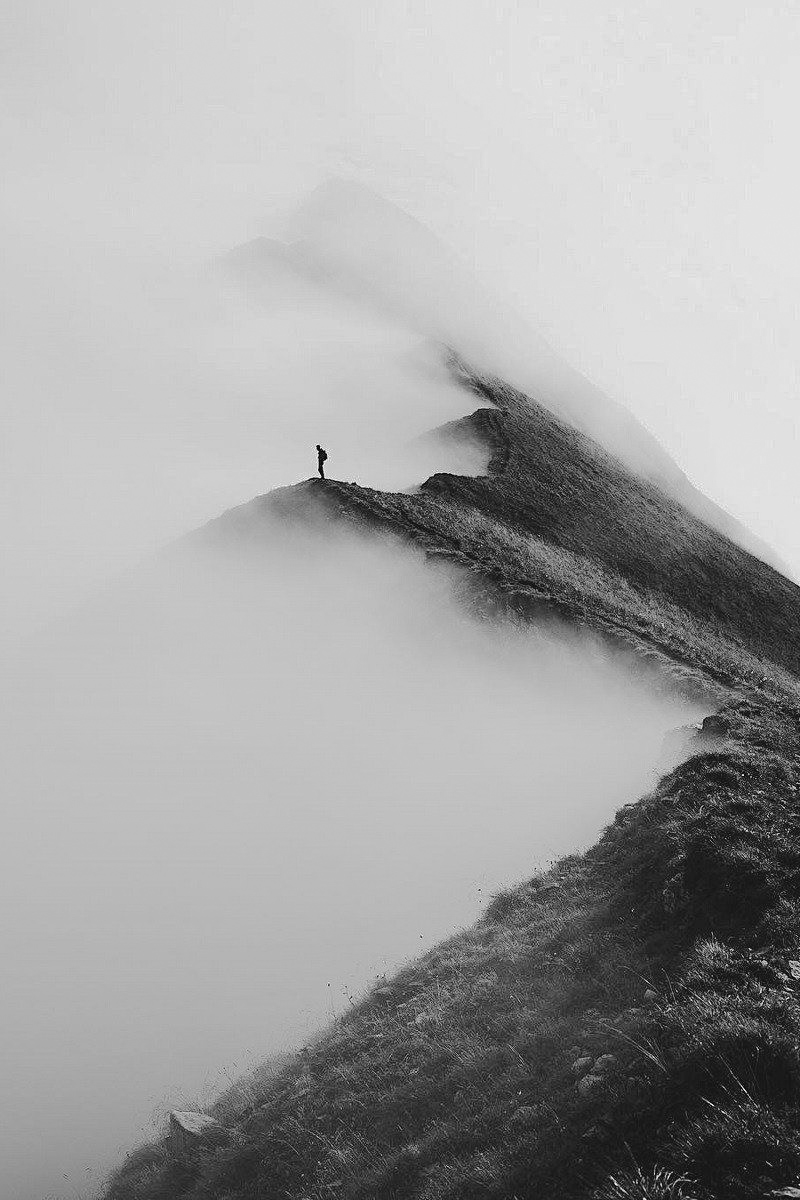
We think focus is something we aim. The research suggests it is something we construct by suppressing everything else, which means distraction may be less a failure of attention than the same system solving a different problem.
Sometime around the year 380, in the Egyptian desert, a monk named Evagrius Ponticus wrote down a problem that would sound familiar sixteen centuries later. He called it acedia. It arrived predictably, sometime around the fourth hour of the morning, and lasted until the eighth. The sun seemed to stop moving. The day stretched unbearably long. The monk wandered toward the window to see whether time had passed, became irritated with the people around him, and began to imagine that his real work would somehow be easier somewhere else.
John Cassian carried the description into Latin a generation later. His afflicted monk repeatedly looked toward the sun, waiting for it to set, restless and unable to remain with his work. Ten in the morning until two in the afternoon. Compulsive checking. Restlessness that feels like insight. The sudden certainty that somewhere else would be better. It sounds remarkably like an ordinary afternoon in 2026.
Which is useful, because it disrupts one of our favorite stories about attention: that we possessed it naturally until technology took it away. Evagrius had no phone. He had a stone cell, the sun, and himself. Technology did not invent distraction. It built an environment capable of producing one of its oldest forms almost continuously.
That leaves a more interesting question. What is focus, mechanically, that makes its failure so recognizable across sixteen centuries?
I. WHAT WE CALL FOCUS MAY BEGIN WITH SUPPRESSION
William James gave psychology its famous definition of attention in 1890. The mind, he wrote, takes possession of one among several possible objects or trains of thought. The part that matters comes immediately afterward. Attention, he said, requires "withdrawal from some things in order to deal effectively with others."
Withdrawal.
The modern metaphor of attention is usually illumination. We imagine a spotlight moving toward the thing that matters. James's wording points somewhere else. Perhaps the target becomes clear because everything competing with it is being made less available.
James believed the ability to repeatedly return wandering attention was so important that he called it the root of judgment, character, and will. An education that improved it, he wrote, would be an education par excellence. Then he admitted that he had no clear method for producing it. The faculty was easy to describe and difficult to train.
Modern neuroscience has made one part of the problem more visible. Give the visual system something conspicuous, an unusual color or an abrupt feature, and it generates a legitimate bottom up signal. The object really does compete for processing. But the nervous system also appears capable of suppressing competing locations. One electrical signature associated with this process is called the Pd. Under certain experimental conditions, activity associated with a distractor is pushed below the level of nearby objects that were never especially interesting in the first place.
Alpha band activity tells a related story. Increased alpha power is generally associated with reduced cortical excitability, and in a preregistered study of 33 participants, the alpha pattern followed the moving distractor while the target remained fixed. The brain appeared to be tracking where processing should be reduced.
The field is not settled. Some researchers argue that salient objects capture attention first and are then rapidly disengaged rather than prevented from capturing it. Other paradigms produce different interpretations of alpha activity. The disagreement is important. So is the larger pattern. Attention does not appear to be produced only by adding more processing to the chosen object. It also depends on what the system successfully refuses to process.
A 2026 mouse experiment makes the idea almost unnervingly concrete. Researchers disrupted locus coeruleus input to prefrontal cortex while imaging neural activity. Removing that input did not make the cortex quiet. It made it busier. The proportion of neurons responding to the task rose from 27 percent to 40 percent. Individual cells became less selective. More neurons were participating, yet the population became worse at predicting the animal's choices.
More activity. Less information.
That may be a better description of distraction than the metaphor of a weak spotlight. A scattered mind is not necessarily empty. It may be crowded. Too many things remain eligible to matter.
II. THE ATHLETE DOES NOT LOOK HARDER
Sport gives us a behavioral version of the same problem. In the 1990s, Joan Vickers began studying the quiet eye, the final stable fixation before an aiming movement. In basketball, experts held that fixation longer than near experts. In Vickers's original study, the experts also shot more accurately.
The fact usually repeated online is that better performers look longer. The stranger detail is what happened next. Their fixation also ended earlier relative to the movement itself. The visual state had stabilized. The relevant information had been collected. Then the athlete released the shot.
Vickers cautiously proposed a location suppression account: perhaps the expert is not extracting endlessly more information from the target. Perhaps competing locations are being held down long enough for one representation to stabilize.
Later evidence supports a real quiet eye difference between experts and novices, though the mechanism remains unresolved. A meta analysis found a large difference in fixation duration across expertise levels, while the difference between successful and unsuccessful trials within the same athlete was considerably smaller. Training also appears to change gaze behavior more reliably than it changes performance itself. Even researchers associated with quiet eye work have publicly acknowledged that we still do not know exactly why it works.
That uncertainty makes the useful point sharper. Expert attention often does not look like greater visual effort. It looks like fewer possibilities remaining alive at once.
III. DISTRACTION MAY BE ATTENTION RUNNING ANOTHER POLICY
The locus coeruleus is a small structure in the brainstem that sends noradrenaline widely through the cortex. Its size makes the reach of its influence difficult to intuit.
One influential model, developed by Gary Aston-Jones and Jonathan Cohen, describes two broad patterns of activity. In a more phasic mode, brief bursts accompany decisions and help the organism exploit the task it is already performing. At higher tonic levels, performance on that task deteriorates and the organism becomes more likely to disengage and explore alternatives.
A 2024 mouse experiment that directly manipulated these patterns found that different modes shifted activity across the cortical hierarchy. Moderate tonic activation favored association cortex, while burst like stimulation favored sensory processing. The modes are ends of a continuum rather than two neat switches. But the underlying idea is compelling: the same system can support staying and leaving.
Distraction is therefore not automatically evidence that the mechanism for attention has failed. The system may be doing something attention systems evolved to do. Search elsewhere when the current patch no longer appears worth exploiting.
Ecologist Eric Charnov formalized this problem in 1976 through the marginal value theorem. A foraging animal should leave its current food patch when the rate of return falls to the average rate available across the environment. The surprising prediction comes from changing the richness of the wider habitat. When the environment contains better alternatives, the rational animal should leave each individual patch sooner.
Now place a human being inside a feed. Every thumb movement offers another patch. The next one may be funnier, angrier, more beautiful, more useful, more emotionally charged, more personally relevant. The switching cost is almost zero. In an environment with an artificially high average rate of novelty, rapid departure may be less a failure of discipline than an understandable response to the structure of the environment.
We often ask people to develop stronger attention while leaving the habitat completely unchanged. That is like asking an animal to stop foraging while continuously increasing the expected value of the next patch. The problem is framed as character. The mechanism may be environmental.
IV. NATURE BUYS PRECISION BY GIVING SOMETHING ELSE UP
Selective attention always carries a trade. In 1979, Alexandra Pietrewicz and Alan Kamil trained five blue jays to detect moths camouflaged against bark. When the birds repeatedly encountered one moth species, detection improved across successive trials. When two species were intermixed, the advantage disappeared. The birds appeared to construct a search image, a perceptual template that made one kind of object increasingly easy to find. Repetition sharpened one category by narrowing the search. The gain was inseparable from the exclusion.
Other animals solve the same problem structurally. Jumping spiders have broad secondary eyes that detect motion and forward facing principal eyes with a tiny high resolution field. Those principal retinas physically move behind the lens, driven by muscles. The spider achieves detailed inspection through movement.
Mantis shrimp possess far more photoreceptor classes than humans, yet behavioral experiments found surprisingly poor wavelength discrimination. Their system appears optimized for rapid color recognition through scanning rather than for the comparative discrimination humans perform.
Each perceptual system buys something by giving something else up. Wide field versus resolution. Recognition versus discrimination. Speed versus comparison. There is no perception without selection, and no selection without loss.
Attention is one expression of a broader principle: to make something vivid, a system has to let something else recede.
V. ART HAS ALWAYS UNDERSTOOD DURATION
Researchers have stood inside museums with stopwatches and measured how long people look at art. The results are almost comically stable. At the Art Institute of Chicago, the mean viewing time was 28.63 seconds, and the median was 21 seconds. An earlier study at the Metropolitan Museum of Art produced a mean of 27.2 seconds and a median of 17.
Sixteen years apart. Different museums. Different paintings. Roughly half a minute.
No visitor enters a museum declaring that 20 seconds is the ideal length of engagement with a painting. The duration arrives as a default.
Artists have repeatedly responded by making duration impossible to avoid. In 2010, Marina Abramović sat in the Museum of Modern Art throughout every open hour of The Artist Is Present. Visitors could sit opposite her and remain for as long as they chose. Very little happened. That was the work. The object was replaced by a sustained encounter, and the viewer's inability to escape into another image became part of what they were experiencing.
James Turrell engineers perception differently. His Skyspaces place the viewer beneath an aperture open to the actual sky while artificial illumination changes the surrounding field. Remain long enough and the sky can appear to flatten into a plane of color. The work develops through duration because the visual system itself has to change. Turrell has described the intention directly: he wants to shape the experience of seeing rather than merely deliver an image.
Art understands what most productivity advice ignores. You cannot command depth while preserving every exit. Attention often needs an architecture.
VI. WE LEARNED HOW TO SELL THE SCARCE THING
In 1971, Herbert Simon wrote one of the most consequential sentences in the history of the attention economy. A wealth of information, he observed, creates a poverty of attention because information consumes the attention of its recipients.
The scarce object is not information. It is the human capacity required to receive it.
Commercial systems had already begun measuring that scarcity decades earlier. Radio audience research moved from asking households what they remembered hearing to asking what was playing in the room at the moment of the phone call. The definition of attention became increasingly operational. The radio is on. A person is near it.
That simplification mattered because measurements do more than describe systems. They become targets. Once presence becomes the metric, industries optimize for presence. Once clicks become the metric, products optimize for clicks. Once minutes watched become the metric, systems optimize for minutes watched. A metric begins as an approximation of attention and gradually reshapes the environment in which attention occurs.
Historian Jonathan Crary argues that the modern problem of attention emerged alongside institutional attempts to manufacture attentiveness in workers and consumers. Under this reading, distraction was never simply the enemy of modern attention. The two developed together. The more intensively institutions tried to organize attention, the more visible and consequential its failures became. Attention and distraction arrived through the same door.
VII. THE MONKS HAD ALREADY FOUND THE PRACTICAL PROBLEM
William James believed voluntary attention was central to character. He could not tell people how to train it. The monks had spent centuries experimenting.
Jamie Kreiner's history of medieval monastic distraction is valuable because these were people who had already removed many of the things we blame today. No feed. No push notifications. No television. No inbox. And still their minds wandered.
They did not conclude that the answer was to want concentration more intensely. They manipulated conditions. Sleep. Food. Posture. Manual labor. Reading. Schedule. The arrangement of the day. They treated attention as a technical problem involving a body rather than as a moral test occurring only inside a mind.
Modern research increasingly makes that old intuition easier to defend. A 2025 meta review combined 30 systematic reviews, covering 383 studies and 18,347 people, examining the acute cognitive effects of exercise. A single bout of physical activity produced a small to moderate improvement in cognition overall. Attention and executive function both improved.
The effect is not transformational. It is temporary. That may be precisely the point. The state of cognition depends partly on the state of the organism producing it. We keep treating focus as something a mind should generate in spite of the body and environment. The evidence keeps pointing back toward the conditions.
VIII. THE NOONDAY DEMON STILL HAS A TIMETABLE
Evagrius did not describe acedia as a permanent identity. It came at a particular time. That detail contains a different way of thinking about distraction.
Instead of asking why am I unable to focus, ask what is true about the system when focus collapses. How long has attention already been suppressing alternatives? How rewarding is the surrounding environment? How many exits remain available? What state is the body in? What is the task currently returning for the effort being spent? Which distractions could be removed rather than resisted?
The phone matters. So does sleep. So does posture. So does environment. So does the reward structure of the work. So does whether every moment of difficulty has an immediate alternative waiting one thumb movement away.
Attention becomes easier to understand when it stops being treated as a moral substance that some people possess in greater quantities. Focus is an arrangement. It depends on the nervous system prioritizing one thing while allowing others to disappear. It depends on the environment making departure more or less attractive. It depends on a body capable of sustaining the suppressive work. And it depends on something being worth remaining with.
The monk changes his day. The athlete stabilizes the gaze. The artist changes the room. The animal changes patches. The mechanism changes scale, but the problem remains recognizable.
We do not simply choose what to attend to. We continuously construct a world in which some things are allowed to matter and others are forced to recede.
Perhaps that is why William James connected attention to character. Not because focus proves discipline. Because a life eventually becomes whatever repeatedly survives that selection.
Attention is not a spotlight you point. It is everything you were willing to put down.
ON THE EVIDENCE
The suppression account of visual attention is influential but disputed; competing models argue that salient stimuli may capture attention before rapid disengagement. The locus coeruleus experiments discussed here were conducted in mice and should not be treated as direct evidence for human subjective states. Quiet eye research finds reliable expertise differences in gaze duration, while the mechanism remains unresolved. Charnov's marginal value theorem is an ecological model being used here as an interpretive frame for digital environments. Museum viewing time studies describe behavior rather than explaining it. The acute exercise effect on cognition is small to moderate and temporary. The historical and artistic material broadens the argument rather than serving as experimental evidence for the neural mechanisms.

A return to awareness.
Someone forwarded this to you? Research goes out every week.
Opens Messages with the word ready. Or text JOIN to (303) 570 5060 yourself.
One Research letter a week by text. Message and data rates may apply. Reply STOP at any time to end. To come back after that, text START to (303) 570 5060.
From phorme
Research is where the ideas are explored. phorme is where they become practice. Thirty dollars a month, cancel at any time. Join