CEOs and Elite Athletes Have to Act Before the Whole Picture Arrives
The best cricket batsmen move their eyes to where the ball will bounce before it gets there. Acting before the whole picture arrives is a skill, and it gets better when every decision carries a written prediction and a date to check it.
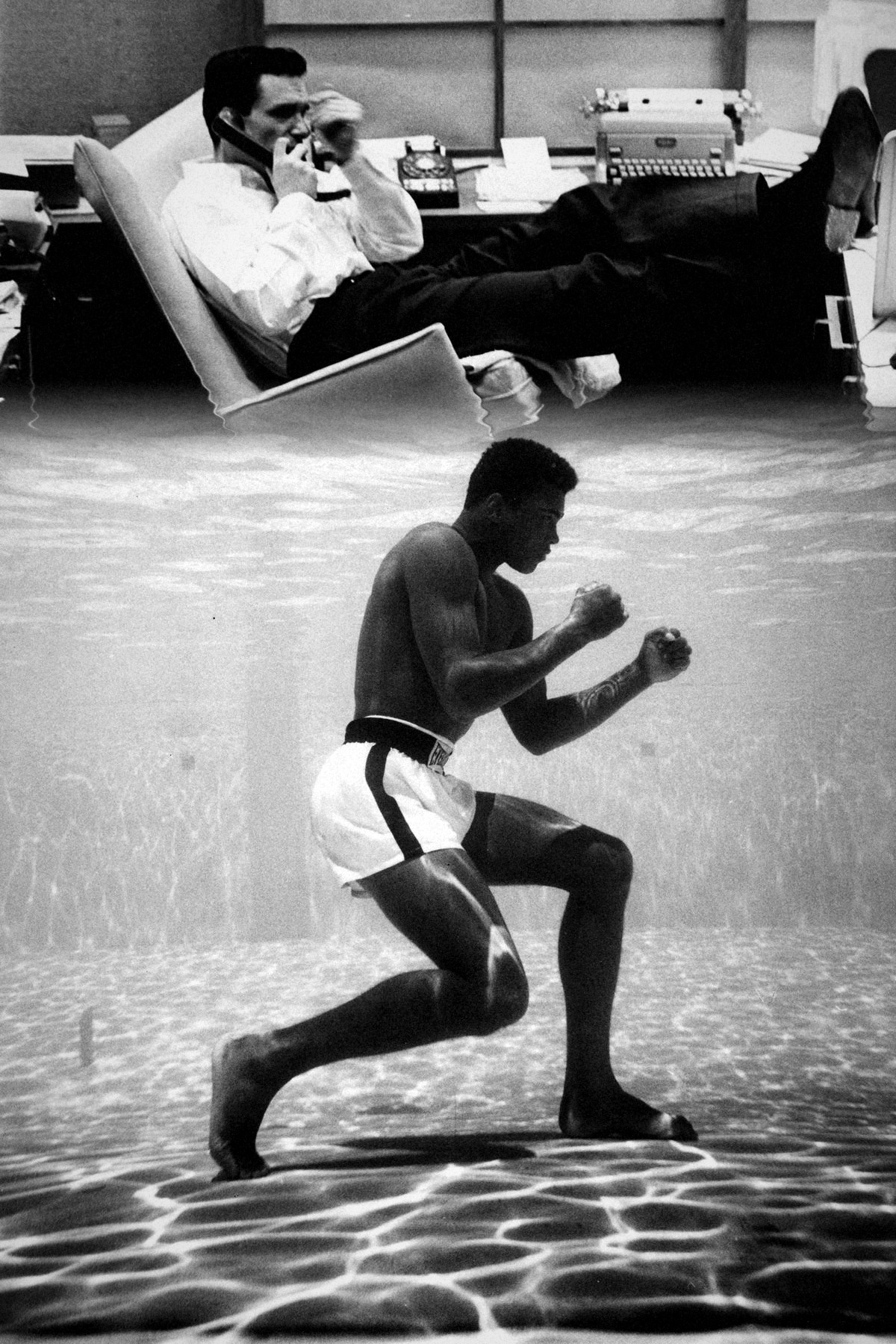
The ball keeps moving. The opportunity keeps changing. At some point, waiting for more information becomes a decision of its own.
An athlete and a chief executive work at very different speeds, with very different consequences. Yet both can face a familiar problem: they must begin acting while part of the situation remains unknown.
We often describe the people who handle this well as decisive. They trust themselves. They have good instincts. They know when to move.
Those descriptions leave out the harder questions. What is their confidence built on? Which information are they using? What would make them change their mind?
A cricket batsman offers an unusually clear place to begin.
In 2000, Michael Land and Peter McLeod recorded the eye movements of batsmen with different skill levels. The players watched the ball's release, then moved their eyes ahead toward its expected bounce point. After the bounce, they tracked the ball for a short period.
The eyes were anticipating where useful information would appear.
That movement is called a predictive saccade. In the small sample studied, an earlier first saccade helped distinguish better players from weaker ones. Their gaze strategy formed part of their skill 1.
The finding makes the phrase "keep your eye on the ball" more interesting. Following an event can involve looking ahead of it. Attention has to arrive where the next useful piece of information will become available.
For someone watching from the boundary, the shot is the visible achievement. The organisation of attention happens before it.
A separate line of research has examined how expectations influence movement when sensory information is uncertain.
In a 2004 experiment, Konrad Körding and Daniel Wolpert manipulated visual feedback during a reaching task. They reported that participants combined information about the task's statistical pattern with current sensory feedback, adjusting their responses in a manner consistent with Bayesian estimation.
In that framework, a prior is an expectation about what is likely before the current evidence is considered. The usefulness of new information depends partly on its reliability 2.
That interpretation needs qualification. A later analysis of the original data challenged the conclusion that participants had learned and combined the information optimally. It proposed that recent trials and the averaging of results could explain important features of the findings. This experiment should therefore be presented as a debated account of learning under uncertainty 3.
Neither study establishes how a chief executive should run a company. The connection is an analogy: action often begins with an expectation, while observation provides an opportunity to revise it.
Jeff Bezos addressed the management version in his 2016 shareholder letter.
He argued that many business decisions should happen before all the desired information has arrived. His suggested threshold was approximately seventy percent. He also stressed the importance of recognising mistakes and correcting them quickly.
The percentage was his rule of thumb, and nobody has tested it as a number. His discussion also distinguished decisions that can be reversed from those requiring a different process 4.
That distinction matters more than the number.
Testing a different meeting structure and committing a company to an expensive acquisition are different kinds of decisions. The cost of being wrong, the time available, and the ability to reverse course should change how much evidence we require.
"Move faster" leaves all of that unspecified.
A more useful question is: what can I responsibly decide with the information available, and how will I discover whether that decision needs to change?
This is where the comparison becomes useful in ordinary life.
Consider someone who has delayed a small project for weeks. Another conversation might help. Another article might help. Another round of planning might help. Each additional step feels like preparation.
But preparation needs a purpose. It should resolve a specific uncertainty or improve the next action. Otherwise, gathering information can become a way to postpone exposure to an outcome.
The opposite problem is just as real. Someone can mistake familiarity for sound judgment. A situation resembles one they have handled before, so they assume the same response will work. Confidence arrives before they have examined what changed.
Both situations call for a closer relationship between a decision and its evidence.
Before acting, write down what you expect to happen. Name the experience behind that expectation. Identify the uncertainty that matters most.
After acting, return to the prediction. What happened? What surprised you? Which assumption failed? What should change next time?
This is a practical discipline for examining judgment. It cannot remove uncertainty, and it will not turn every decision into a controlled experiment. What it gives you is something more useful to inspect than a memory of how confident you felt.
The athlete and the executive remain different cases. A batsman receives rapid information about a delivery. A business outcome may emerge months later and reflect many forces beyond one decision. Feedback can be delayed, incomplete, or difficult to interpret.
That makes careful review more necessary, while also limiting what any single result can teach.
For your own practice, begin with a decision you can reverse.
Write down your current choice and its main assumption. Set a time to decide. Choose a date to review the result. Name the condition that would make you reconsider.
Then follow through on the review as seriously as you followed through on the decision.
The human challenge is familiar: we want to know that our choice will work before we make it. Sometimes the next useful information only becomes available after we begin.

References
- [1] Land MF, McLeod P (2000). From eye movements to actions: how batsmen hit the ball. Nature Neuroscience 3 1340 to 1345.
- [2] Körding KP, Wolpert DM (2004). Bayesian integration in sensorimotor learning. Nature 427 244 to 247.
- [3] Duffy S, Hertel J, Igan D, Pinheiro M, Smith J (2022). On Bayesian integration in sensorimotor learning: Another look at Kording and Wolpert (2004). Cortex 153 87 to 96.
- [4] Bezos J (2017). 2016 Letter to Shareholders. Amazon.
A return to awareness.
Someone forwarded this to you? Research goes out every week.
Opens Messages with the word ready. Or text JOIN to (855) 601 2997 yourself.
One Research letter a week by text. Message and data rates may apply. Reply STOP at any time to end. To come back after that, text START to (855) 601 2997.
From phorme
Research is where the ideas are explored. phorme is where they become practice. Thirty dollars a month, cancel at any time. Join