Who Chose Your Movements?
After more than thirty thousand repetitions, a learned decision relied less on the brain's system for deliberate control. The finding helps explain how practice becomes automatic, and why the patterns selected by cultures and institutions can become part of us before we know to question them.
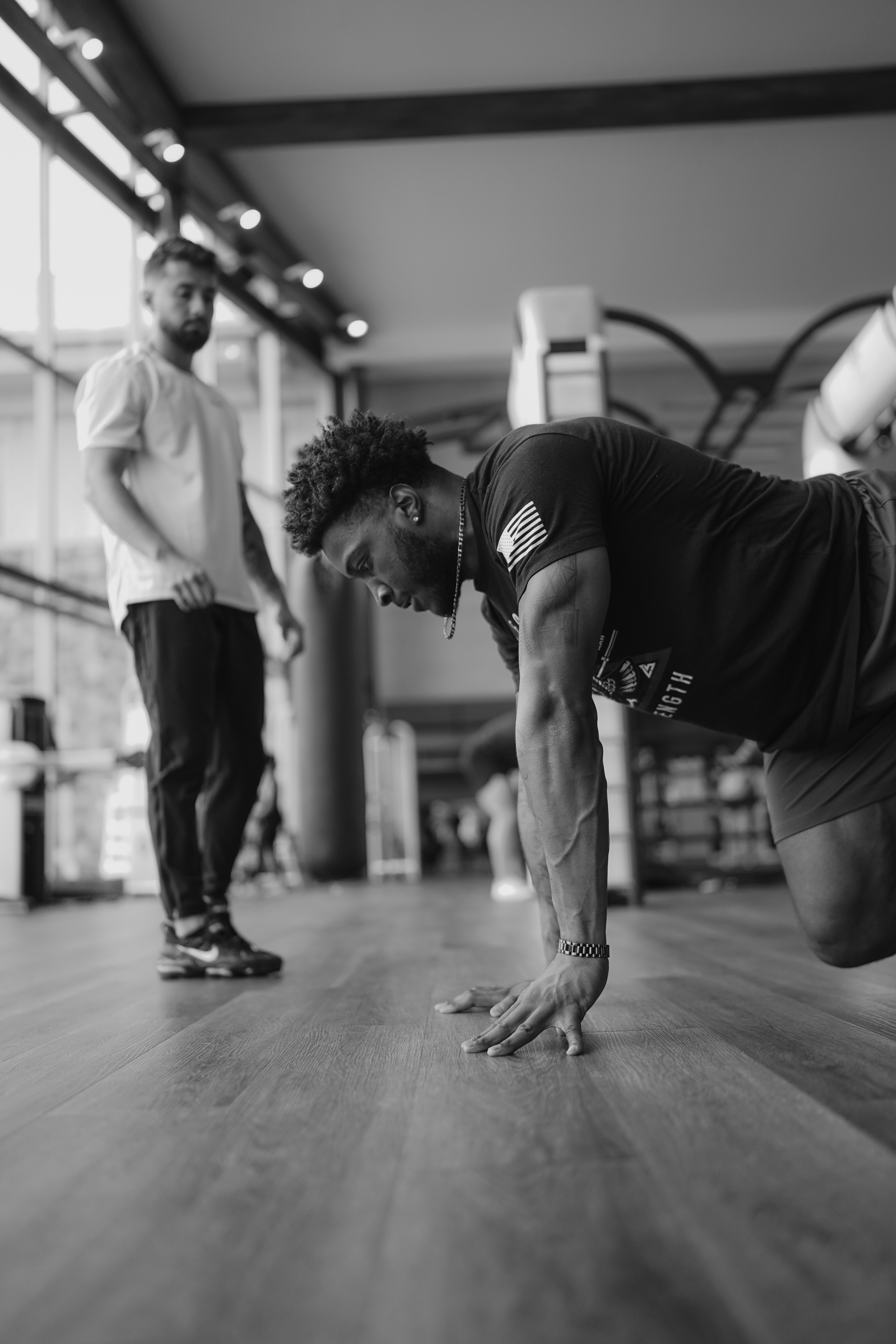
After more than thirty thousand repetitions, a visual decision began relying on a different organization of activity in the brain.
In a recent study published in the Journal of Cognitive Neuroscience, participants spent five to ten weeks learning to categorize unfamiliar images of morphed cars 1. The task began as a conscious problem. Participants had to identify the visual information separating one category from another, decide what mattered, and select the correct response.
Early in training, the visual region processing the images communicated more strongly with the prefrontal cortex, which helps manage attention and controlled decisions. After extensive practice, functional connectivity between these regions decreased, while connectivity between the visual region and areas involved in motor output increased.
Participants with greater separation between visual processing and the prefrontal cortex also performed better when categorizing images while completing another task. Their improved performance suggests that the learned decision required less of the limited attention needed for deliberate control.
The result should be read narrowly. Researchers measured functional connectivity, which describes the relationship between activity across regions rather than a literal transfer of information from one permanent location to another. The experiment studied visual categorization rather than physical movement, and its small sample prevents broad conclusions about how every form of expertise develops.
Within those limits, the study offers a valuable account of automaticity. Extensive practice changed the neural circuitry supporting the decision, allowing perception to produce an appropriate response with less dependence on conscious oversight.
What disappears when a skill becomes automatic
Expertise is often described through what a person can do, although one of its defining qualities is how much the person no longer has to consciously decide.
An experienced boxer can recognize an attack through subtle changes in distance, rhythm, and weight distribution. A skilled coach can see how an athlete is organizing pressure before the final compensation becomes visible. These responses may appear instinctive because the years of exposure responsible for them are absent from the immediate experience of acting.
Practice changes the information a person can detect and the speed with which that information becomes action. It gradually compresses perception, interpretation, and response into a process that no longer requires each stage to be consciously narrated.
This is essential for performance because conscious attention is slow and limited. A fighter who must verbally interpret every movement will respond late. A musician who attempts to consciously control every component of a phrase will lose its continuity. Skill depends on allowing some decisions to operate beyond continuous deliberation.
The advantage is clear. The origin of the pattern, however, can become difficult to see once its execution feels natural.
That becomes important because people do not consciously select everything they repeat.
The body as social memory
In Outline of a Theory of Practice, the sociologist Pierre Bourdieu described the body as a place where culture preserves its instructions 2.
His concept of bodily hexis referred to the durable ways social experience appears through posture, gesture, speech, expression, and physical bearing. Bourdieu's argument extended beyond the idea that the body reveals beliefs formed elsewhere. Repeated ways of standing, speaking, moving, and responding participate in shaping what a person comes to feel is natural, appropriate, or possible.
Many of these patterns are learned without formal instruction. A child discovers how much space they are permitted to occupy through approval and correction. An athlete learns which sensations deserve attention and which should be concealed. Social expectations surrounding gender, class, authority, beauty, discipline, and emotion become embodied through thousands of ordinary interactions.
Eventually, the person no longer experiences the behavior as something learned. The posture feels like their posture. The response feels like their response. The social history that produced it has disappeared from awareness.
Bourdieu wrote that societies treat the body as a memory because physical habits can preserve cultural principles without requiring those principles to remain conscious. A person can continue following an instruction after forgetting when, where, or from whom it was learned.
The neuroscience study and Bourdieu's social theory operate at different levels. One examines how extensive experience reduces the involvement of deliberate control in a specific task. The other explains how social environments produce durable dispositions that continue operating without conscious examination.
Together, they reveal a tension inside human learning. Automaticity allows us to become highly capable, while also making the origins of familiar patterns harder to question.
When institutions selected the movements
The history of modern exercise shows how movement has been used to shape entire populations.
In When Fitness Went Global, historian Conor Heffernan traces the international spread of physical culture during the nineteenth century 3. Gymnastics, military drills, Indian club swinging, yoga, judo, weightlifting, and other practices travelled through schools, armies, colonial networks, printed manuals, trade routes, and commercial markets.
The practices that spread were shaped partly by how well they served the institutions carrying them. Schools required movements that could be taught to large groups within limited time and space. Militaries needed drills that coordinated bodies and conditioned people to act under pressure. Governments connected physical training to public health, military readiness, industrial productivity, and national identity. Commercial systems favored practices that could be illustrated, standardized, measured, and sold.
Each system defined which movements mattered, what improvement looked like, and which type of body represented success. Those decisions carried assumptions about health, gender, race, citizenship, discipline, and social order.
A school drill could improve coordination while teaching students to move in unison under external command. Military training could build physical capacity while rehearsing obedience and collective action. Commercial fitness systems could promote strength while distributing particular images of beauty, morality, masculinity, femininity, and self control.
The physical and cultural effects were intertwined because the same repeated practice carried both.
This history changes how we should understand exercise. A training system is never only a collection of movements. It is also a collection of decisions about what deserves attention, which capacities should be developed, what forms of discomfort are acceptable, and what kind of person the participant is being prepared to become.
Someone selected those decisions before the participant began repeating them.
Every practice creates a way of seeing
Training affects tissue, but it also organizes perception around a particular set of problems.
Boxing makes distance, rhythm, pressure, and threat increasingly meaningful. Dance develops sensitivity to timing, shape, expression, and space. Wrestling builds an intimate understanding of leverage, contact, and changing constraints. Distance running alters the way a person interprets pace, breath, discomfort, and sustained effort.
These practices do not produce identical personalities. Their effects depend on the individual, the coach, the environment, and the purpose of training. Their repeated demands still determine which information becomes salient and which responses become available under pressure.
A practice can increase physical capacity while developing dependence on external instruction. It can improve discipline while narrowing self expression. It can create confidence within one environment that disappears outside it. It can also expose a person to uncertainty, cooperation, creativity, and forms of attention that were previously unavailable.
A useful evaluation of training must therefore extend beyond muscles, calories, appearance, and immediate performance. It should consider what the practice repeatedly asks a person to notice, which responses it rewards, how it organizes discomfort, and which qualities it leaves undeveloped.
The same principle applies beyond formal exercise. Digital platforms train attention through repeated exposure. Workplaces rehearse particular relationships with authority and initiative. Social groups teach people which forms of expression will be rewarded, ignored, or punished.
Human beings are always practicing ways of perceiving and responding, even when the practice has no official name.
Choosing what deserves to become automatic
The neuroscience of automaticity, Bourdieu's account of bodily memory, and Heffernan's history of physical culture converge on the importance of selection.
Deliberation cannot accompany every skilled action. Its most important role may come earlier, while we can still examine the pattern being repeated and decide whether its consequences are worth embodying.
That requires looking beyond whether a training method produces visible progress. We also have to ask where the method came from, which problems it teaches us to solve, how it shapes our attention, and whether the capacities it develops belong in the life we are trying to build.
Some movements were chosen because they serve our actual aims. Others were inherited from a sport, an institution, an injury, an aesthetic standard, or an algorithm. Without examining that history, familiarity can easily be mistaken for personal preference.
Training eventually becomes part of how a person interprets sensation, occupies space, responds to pressure, and acts before conscious thought arrives. That is the purpose of practice, and the reason it deserves more careful consideration.
The question is larger than which workout should come next.
It is which patterns deserve to become part of you.

References
- [1] Patrick H. Cox, Clara A. Scholl, Marissa L. Laws, Nelson E. Jaimes, Xiong Jiang, Maximilian Riesenhuber (2026). Extensive Experience Remodels Neural Task Circuitry to Escape the Frontal Bottleneck and Increase Automaticity of Categorization. Journal of Cognitive Neuroscience.
- [2] Pierre Bourdieu, translated by Richard Nice (1977). Outline of a Theory of Practice. Cambridge University Press.
- [3] Conor Heffernan (2026). When Fitness Went Global: The Rise of Physical Culture in the Nineteenth Century. Bloomsbury Academic.
A return to awareness.
Someone forwarded this to you? The letter goes out every week.
Opens Messages with the word ready. Or text JOIN to (303) 570 5060 yourself.
One letter a week by text. Message and data rates may apply. Reply STOP at any time to end. To come back after that, text START to (303) 570 5060.
From phorme
The letter is where the ideas are explored. phorme is where they become practice. Thirty dollars a month, cancel at any time. Join